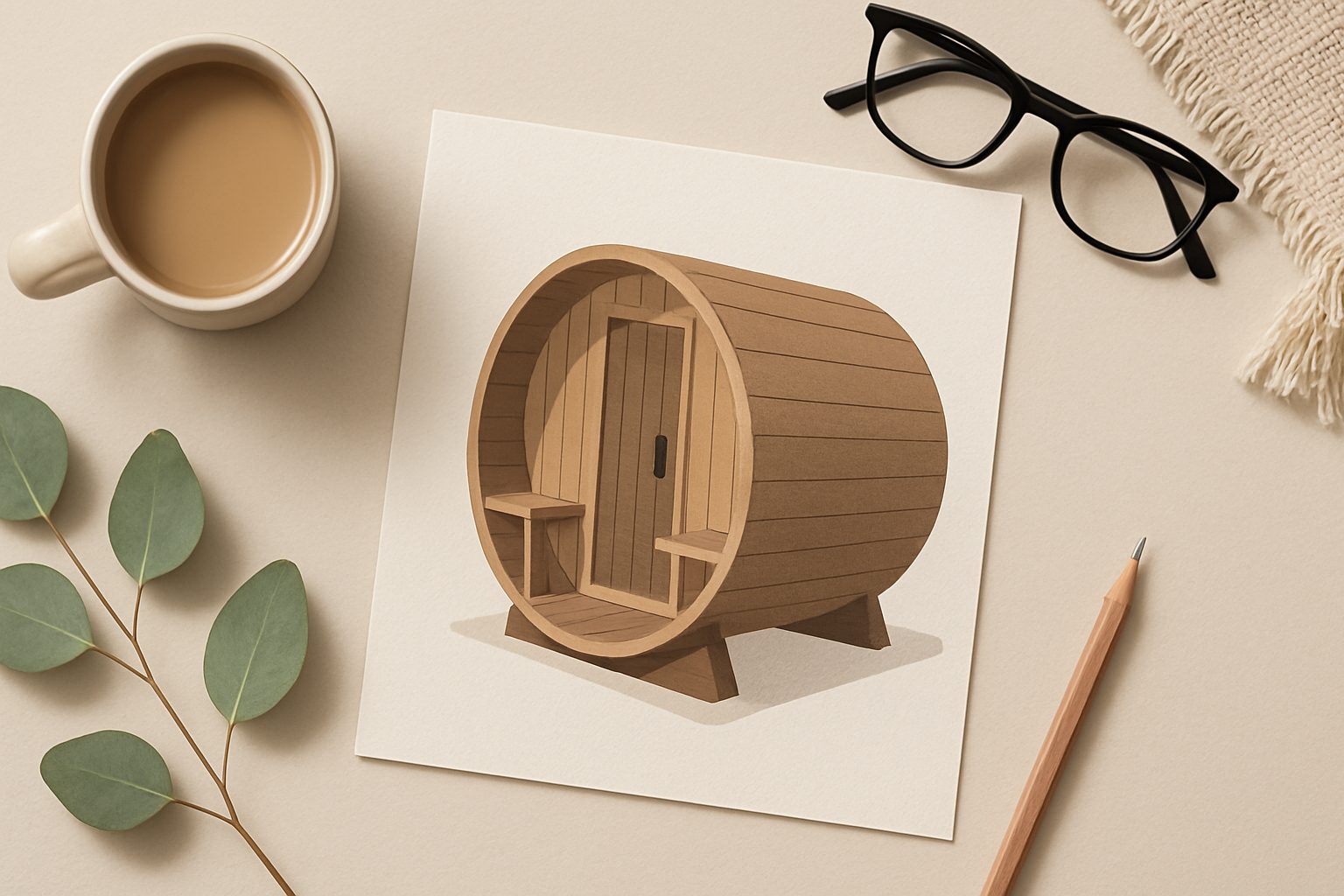
What Base Does a Barrel Sauna Need? UK Garden Groundwork Guide
A barrel sauna isn't particularly heavy—most models weigh between 500 and 1,200 kg once filled and installed—but what matters isn't the static load. It's water. Your sauna will absorb moisture from below, from splashes after cooling-off dips, and from the sheer humidity of the UK climate. A poor base will lead to wood rot, structural sag, and a sauna that needs expensive repair or replacement within a few years. Choosing the right foundation is the difference between a sauna that lasts 10+ years and one that becomes a garden eyesore.
Why Your Base Matters
Barrel saunas sit directly on their base—there's minimal air gap underneath. This means any standing water, poor drainage, or rising damp will be absorbed directly into the timber. The base must do three things: distribute the weight evenly, provide adequate drainage, and stay stable through freeze-thaw cycles common in the UK.
The material you choose also affects your sauna's lifespan and usability. Some bases shift over time; others trap moisture and accelerate rot. In wet UK climates, the difference between a good base and a mediocre one can be five years of sauna life.
Concrete Pad
A solid concrete pad is the most durable option and what most sauna installers recommend for UK gardens.
How it works: Pour or lay a 100–150 mm concrete pad at least 50 mm larger than the sauna's footprint on all sides. The concrete should slope very slightly (5–10 mm per metre) away from the sauna to shed water.
Pros: Concrete is stable, won't shift under weight, and provides excellent drainage if done correctly. Once cured, it's maintenance-free. It's also the easiest base to level precisely—crucial for preventing water pooling.
Cons: Upfront cost is higher than gravel (typically £300–800 depending on size). Concrete does absorb some moisture over time, so you'll need to put down a damp-proof layer—usually heavy-duty plastic sheeting or rubber matting—between the pad and the sauna base. Without this, moisture wicks up into the timber.
Drainage note: Don't seal the concrete. Allow it to breathe so water runs off the surface rather than pooling. Some people add a shallow gravel channel around the perimeter to direct water further away.
Gravel Base
A gravel base is the budget option and popular with DIY installers.
How it works: Excavate 150–200 mm, lay landscape fabric to prevent weeds, then fill with 75–100 mm of coarse gravel (10–20 mm stone), topped with a 75 mm layer of pea gravel or similar. Compact the lower layer; leave the top layer loose so water drains through it quickly.
Pros: Low cost (typically £50–150 of materials), no digging heavy concrete, and excellent drainage. In extremely wet conditions, a gravel base actually outperforms concrete because water moves through it so readily. It's also forgiving—small settling doesn't create the uneven surfaces that crack concrete.
Cons: Gravel compacts and shifts over time, especially with UK weather cycles. You'll need to rake and top up every 1–2 years. If your garden is on heavy clay, water will pool beneath the fabric rather than drain away, leaving your sauna sitting on a damp foundation. You must still lay moisture barriers between the gravel and the sauna base.
Best for: Gardens with decent natural drainage and owners willing to maintain the base annually.
Timber Decking
Some installers build wooden decking platforms. This is tempting because it looks neat and creates an aesthetic plinth.
Pros: Attractive finish, and the air gap underneath allows ventilation.
Cons: Wood rots, even pressure-treated timber, and it fails faster in wet UK climates than you'd expect. The sauna weight compresses the timbers, trapping moisture at the contact point. You're essentially fighting the sauna's weight and UK humidity to keep the base dry. Not recommended unless you're willing to replace the entire platform every 5–7 years.
Paving Slabs
Laying large concrete paving slabs is a middle ground between a poured pad and gravel.
How it works: Lay slabs on a 50–75 mm sand and gravel bed, leaving small gaps between them for drainage.
Pros: Cheaper than a concrete pour, easier DIY installation, and reasonable stability. Looks tidier than gravel. Slabs can be replaced individually if they crack.
Cons: Gaps between slabs become weak points—water and mud build up, and the base settles unevenly over time. If the ground underneath is soft clay, individual slabs will sink at different rates, creating a rocking foundation. Less reliable than a solid pad.
Best for: Firm, well-draining garden bases where you accept some maintenance.
Drainage Considerations for UK Gardens
Heavy rain isn't the issue—it's standing water. After rain, your base area should dry within 24–48 hours, not sit sodden for a week.
If your garden is flat or slopes toward your sauna location, create a slight berm (raised edge) around the base to direct water away. A simple 100 mm ridge of soil or gravel is often enough. If you're on clay, consider adding a gravel soak-away 1–2 metres downslope to collect and disperse water.
Never site your sauna at the lowest point of your garden. Even if it looks level, clay soils channel water underground toward low spots. Check your garden after heavy rain to see where water naturally pools.
Installation Prep
Before laying any base:
- Check the ground is level (use a spirit level over a 2–metre straightedge)
- Remove turf and topsoil
- Inspect for poor drainage by digging a test hole and filling it with water; if it drains slowly, consider gravel over concrete
Your base will outlast poor planning. Spend an hour assessing your garden's drainage now, not years fixing rot later.
More options
- Dundalk LeisureCraft Barrel Saunas (Amazon UK)
- Harvia Sauna Heaters and Stoves (Amazon UK)
- Sauna Bucket and Ladle Accessory Sets (Amazon UK)
- Outdoor Sauna Cover and Weather Protection (Amazon UK)
- Barrel Sauna Self-Build Kit (Amazon UK)