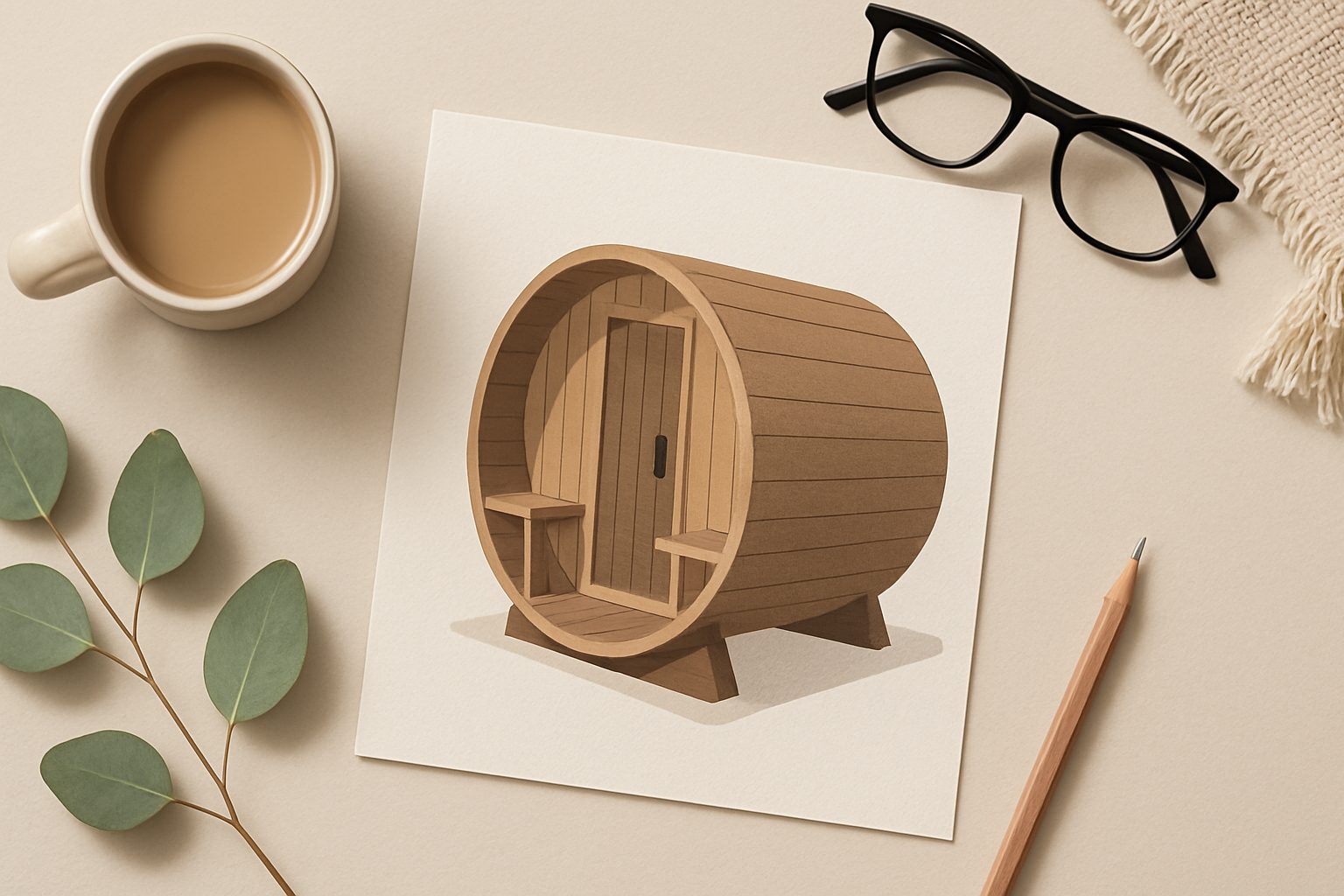
Best Wood Types for Barrel Saunas in the UK Climate: Cedar, Thermowood and Spruce Compared
Choosing the right wood for a barrel sauna isn't a trivial decision, especially in the UK where damp winters and high rainfall create conditions that quickly expose poor material choices. The three species most commonly used for barrel saunas — Western Red Cedar, Thermowood, and Spruce — each perform differently under our challenging climate. Understanding their strengths and limitations will help you pick a sauna that lasts decades rather than one that rots in five years.
Cedar: The Traditional Choice
Western Red Cedar has long been the gold standard for barrel saunas, and for good reason. Its natural resistance to rot comes from volatile oils (primarily thujone) present in the heartwood, which actively inhibit the fungi and bacteria responsible for decay. In the UK's damp environment, this built-in defence is genuinely valuable.
Cedar also insulates well, retaining heat efficiently so your sauna reaches temperature faster and maintains it with less ongoing energy input. The aroma is another notable benefit — that distinctive, slightly sweet cedar scent is a pleasant side effect rather than a marketing gimmick, and it actually has mild antimicrobial properties.
The downsides are real. Cedar is softer than other options, which means it's more susceptible to surface damage and denting. The wood is also less stable dimensionally, expanding and contracting noticeably with moisture and temperature changes. In the UK's volatile weather — damp autumn mornings followed by dry heating — this movement can stress joints over time. Perhaps most significantly, cedar is expensive. A mid-range barrel sauna in cedar typically costs 30–50% more than equivalent Thermowood or treated spruce alternatives.
Cedar requires maintenance: annual inspections of the exterior, occasional sealing of exposed end-grain, and prompt attention to any cracks. Neglect the maintenance schedule, and the advantages disappear quickly. Plan to budget for touch-ups every few years.
Thermowood: The Modern Alternative
Thermowood is softwood (usually spruce or pine) subjected to high-temperature kiln treatment — typically 190–210°C in a controlled, oxygen-free environment. This process transforms the wood's cellular structure, dramatically improving its stability and rot resistance without chemical additives.
The practical advantages in a British climate are substantial. Thermowood has much lower moisture uptake than untreated softwood, meaning it's far less prone to warping, cupping, or joint failure when exposed to our humid conditions. It's also more stable dimensionally, so the sauna holds its shape through seasonal weather swings. Durability approaches that of cedar for interior use, with external components typically lasting 15–20 years compared to cedar's 20–25+ years.
Cost sits between untreated spruce and cedar — often 15–25% cheaper than cedar but slightly dearer than chemically treated spruce. There's no chemical smell to off-gas, which some people prefer on principle, though this is less critical in a well-ventilated sauna.
The trade-offs matter. Thermowood lacks the aesthetic presence of cedar — the colour is often a duller grey-brown, and you don't get that characteristic cedar fragrance. Some users find the wood less visually appealing, though this is entirely subjective. Heat retention is marginally lower than cedar, though the difference is negligible for most users. Like cedar, Thermowood still needs basic maintenance: checking fasteners, inspecting seals, and occasional exterior checks.
Spruce: The Budget Option
Untreated or chemically treated spruce is the entry-level choice. It's cheaper than both cedar and Thermowood — a basic sauna can cost significantly less — and structurally sound when well-maintained. Some budget models come with chemical treatment (often copper-based preservatives) to improve rot resistance.
Spruce's weakness in the UK is obvious: moisture absorption. Untreated spruce will absorb water readily, leading to swelling, cupping, and eventual rot if you're not vigilant. Even chemically treated spruce is less durable than cedar or Thermowood in our damp climate. It also has poorer dimensional stability, meaning visible gaps can appear between planks as the wood moves seasonally.
Chemically treated spruce introduces another consideration: the treatment typically lasts 10–15 years, after which the wood's natural defences are minimal. The initial cost saving often evaporates when you factor in maintenance, potential repairs, or earlier replacement. Heat retention is adequate but inferior to cedar.
If you choose spruce, commit to meticulous ventilation: ensure air circulates inside and outside the sauna, clear debris and leaves from the base regularly, and check fasteners frequently. This isn't a "set and forget" option.
Making Your Choice
For most UK owners, Thermowood offers the best balance: superior durability in our climate, reasonable cost, minimal ongoing maintenance, and stable long-term performance. The aesthetic difference from cedar is real but shouldn't dominate the decision if your primary concern is a sauna that functions reliably for two decades.
Choose cedar if budget is flexible and you value the aesthetic and aroma, but understand that it demands an annual maintenance routine and can fail prematurely if neglected.
Avoid untreated spruce in the UK. If cost is the primary constraint, chemically treated spruce is acceptable only if you're prepared for intensive maintenance and understand you'll likely replace it sooner than cedar or Thermowood.
For more detailed guidance, see our barrel sauna maintenance guide and brand comparison to understand how manufacturer quality varies within each wood type.
More options
- Dundalk LeisureCraft Barrel Saunas (Amazon UK)
- Harvia Sauna Heaters and Stoves (Amazon UK)
- Sauna Bucket and Ladle Accessory Sets (Amazon UK)
- Outdoor Sauna Cover and Weather Protection (Amazon UK)
- Barrel Sauna Self-Build Kit (Amazon UK)